
When you snap down the auto-darkening welding helmet’s visor, the crisp “click” marks the world entering standby mode. You trust it, like trusting your instinct. But have you ever wondered what determines whether this protection arrives precisely and accurately in the millisecond before the arc strikes?
The answer lies in the small, inconspicuous holes around the viewing window—the arc sensors. For modern welding helmets, the number and placement of sensors matter far more than we imagine. They are not just a line on a technical spec sheet; they form an invisible safety network that ensures continuous protection from tricky angles and prevents “accidental exposure.”
The Single Sensor Dilemma: When the “Lone Sentinel” is Blocked
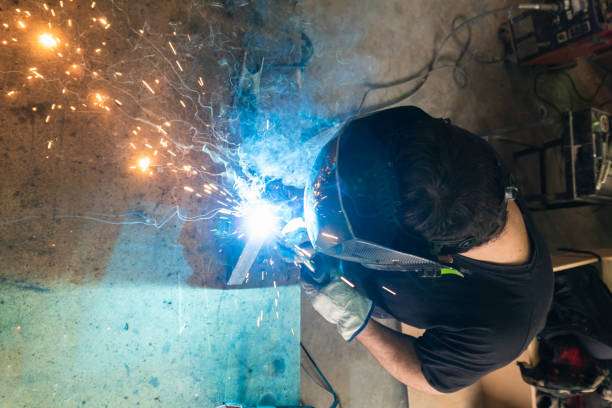
Early auto-darkening helmets mostly had a single sensor, which you can imagine as a loyal but limited-scope sentinel fixed at the front.
In ideal, flat welding conditions with the torch directly facing the sensor, it works perfectly. However, welding rarely stays ideal. Once you start:
- Working on pipe welding, squeezing your body and torch into tight spaces.
- Performing overhead or horizontal welds, creating angled positions between welding helmet and arc.
- Welding complex components, where your arm, torch handle, or the workpiece itself may block the sensor’s line of sight.
In these cases, the “lone sentinel” may completely miss the first arc flash. The result is a dangerous delay or even complete failure.
Your eyes face the intense arc without protection—the so-called “flash-through,” which is not only hazardous but also disrupts workflow and confidence.
Multi-Sensor Systems: Creating a No-Dead-Zone Monitoring Network
To solve this fundamental safety gap, advanced welding helmets now employ multi-sensor designs. Common configurations include 2, 3, or 4 sensors strategically placed around the viewing window (top, bottom, left, and right).
This brings revolutionary changes:
- From point defense to area defense: Multiple sensors form a collaborative network. Even if one is blocked, others detect the arc from different angles, greatly reducing protection failure due to physical obstruction.
- Adaptation to real working postures: The welder’s body is dynamic. Multi-sensor systems ensure that no matter how your head tilts or which direction the torch approaches, at least one sensor has a clear line of sight to trigger auto-darkening, making protection intuitive and reliable.
For example, a welding helmet with four independent arc sensors is like placing watchtowers at each corner of the viewing window. Regardless of the direction the arc comes from, the system quickly detects and triggers darkening. This is critical for welders working in maintenance, repair, or non-standard positions.
Beyond Quantity: How Smart Logic Makes Multi-Sensors “Smarter”
Simply increasing the number of sensors is not enough. Top multi-sensor auto-darkening helmets run intelligent logic internally, usually in two ways:
- Response speed and collaborative interpretation: Speed is life. When an arc flash is detected, signals are processed instantly. Leading welding helmets can respond in 1/30,000 seconds, meaning darkening occurs before you perceive the light. Multiple sensors validate signals to ensure accuracy.
- Sensitivity and delay adjustability: This bridges the system with the welder’s subjective experience. You can adjust sensitivity via external knobs:
- In low-current, stable TIG welding, increase sensitivity to detect even faint arcs.
- In high stray-light or spatter-heavy cutting/grinding, reduce sensitivity to avoid false triggers.
Delay adjustment controls how long the lens stays dark after the arc extinguishes—useful for continuous tack welding, preventing lens flicker and eye fatigue.
From Specs to Experience: How Multi-Sensors Affect Your Daily Work
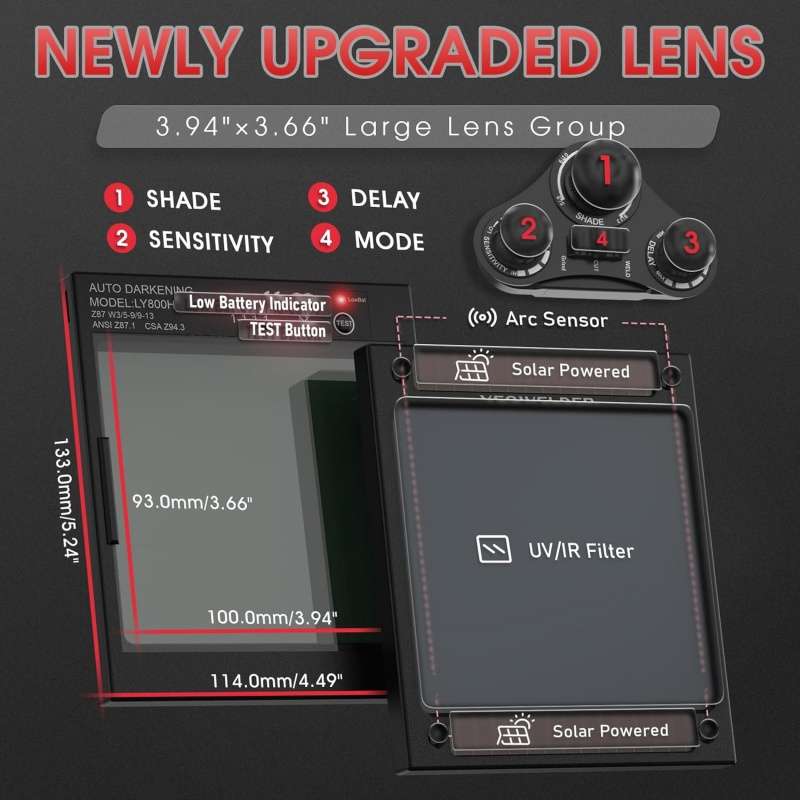
Once you understand the principle, “four sensors” is no longer a cold number. It translates into real peace of mind at work:
- Pipe welding: focus on technique and welds without worrying about angles causing flash-through.
- Overhead welding: protection follows naturally; no need to tilt your head to “align” with the sensor.
- Crowded workshops: interference from nearby welders’ arcs is minimized (multi-sensor + smart algorithms distinguish direct arc from stray light).
Overall, psychological load decreases, and trust in equipment increases, letting you weld more confidently and smoothly.
This all-around reliability is a core value of top-tier welding helmets—silently working to build an indestructible visual shield regardless of posture.
Technical Truth: Sensor FAQ
Q: Will more sensors drain the battery faster and reduce runtime?
A: A valid concern, but the impact is minimal. Modern arc sensors consume very little power. Adding one or two sensors barely affects total power compared to the LCD auto-darkening lens itself. Especially for solar + replaceable battery systems, solar energy easily covers multi-sensor consumption.
Minimal energy cost for a huge safety gain—a worthwhile trade-off.
Q: Do sensors need special cleaning or maintenance? What should I avoid?
A: Sensor maintenance is simple but critical. They are small transparent or semi-transparent windows around the viewing area. Keep them clean and unobstructed.
- Do: Gently wipe with a soft dry cloth or use a blower regularly to remove dust, oil, or fingerprints.
- Don’t: Never cover sensors with paint, stickers, tape, or opaque materials. Some welders cover windows for dust protection during grinding—always leave sensor openings or use dedicated protective covers.
Covering sensors is like blindfolding the welding helmet, rendering it useless.
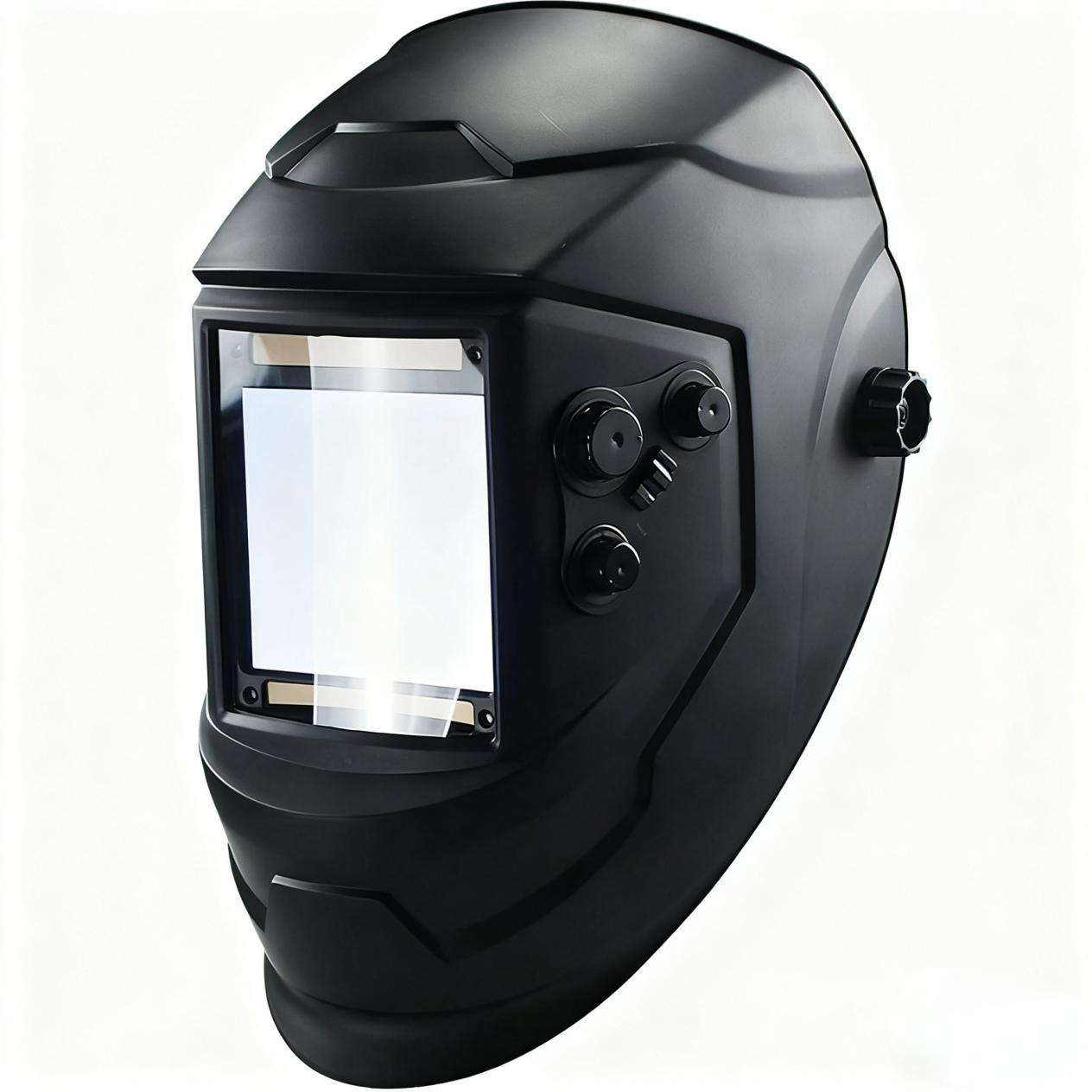
Choosing a welding helmet is essentially choosing a way of working. Do you want a system that depends on ideal conditions as a fragile single point, or one that adapts to the chaos and complexity of real-world work as a resilient network?
Multi-sensor systems are a configuration you won’t go back from. They provide no-dead-zone peace of mind.
When you no longer worry about angles and know protection arrives reliably in any posture, your connection with the craft itself is unobstructed.
On the path to perfect welds, let reliable technology be your silent, steadfast ally. Next time you evaluate an auto-darkening helmet, ask, “How many ‘eyes’ are watching over me?” The answer could be your greatest assurance under the toughest working conditions. Explore welding helmets with multi-sensor protection