
I used to think welding was all muscle memory and a steady hand. I’d spend hours under the hood, chasing a puddle through a murky green window. My welds held and passed inspection, but they lacked intention—functional, not beautiful. The process was just as frustrating: stiff neck, strained eyes, endless squinting through a tiny, distorted view. I felt more like a robot than a craftsman. Then I changed one thing—my perspective. Upgrading my welding helmet didn’t just protect my eyes; it transformed how I experienced the work itself.
This is the story of how moving from a basic hood to a welding helmet designed for clarity didn’t just make me a better welder—it made me an artist who could finally see.
The “Before”: Working in a Fog

My old welder mask was a classic fixed-shade tank. Reliable? Sure. But using it was an act of faith. The “nod-and-pray” technique is familiar to anyone who’s started with one: position your electrode as best you can while seeing the world, nod your head to drop the shield, strike the arc blind, and hope you’re on the seam. Any adjustment meant breaking your stance, flipping up the hood, and starting the awkward dance over.
The bigger issue, though, was the view itself. The small lens had a perpetual twilight tint. Colors were washed out, edges were fuzzy, and judging the exact state of the molten pool was guesswork. It was like trying to paint a masterpiece while looking through a dirty, tinted soda bottle. This wasn’t just an inconvenience; it was a hard ceiling on my skill. You can’t control what you can’t clearly see. The welding helmet, which was supposed to be my tool for precision, was ironically my biggest barrier to achieving it.
The Turning Point: A Window Thrown Open
The shift happened when I borrowed a friend’s modern auto-darkening welding helmet on a big fabrication project. He raved about the “true color” view. I was skeptical—how much difference could a lens really make?
The first time I flipped it down, I actually laughed. It felt like cheating. I could see my workpiece, my gloves, and my bench—not in a surreal green haze, but in near-natural color and light. When I struck the arc, the transition was instantaneous, but the real magic was after. The puddle wasn’t a mysterious blob; it was a defined, shimmering liquid metal. I could see the subtle flow, the edge wetting against the base metal, and the ripples as I moved. For the first time, I wasn’t just making a weld; I was watching it form, and therefore, directing it.
That project was the last one I did with my old gear. I was chasing that clarity, that sense of connection and control. I needed a good welding helmet of my own that was built around that expansive view.
Finding “The One”: More Than a Lens, a Lens on the Work
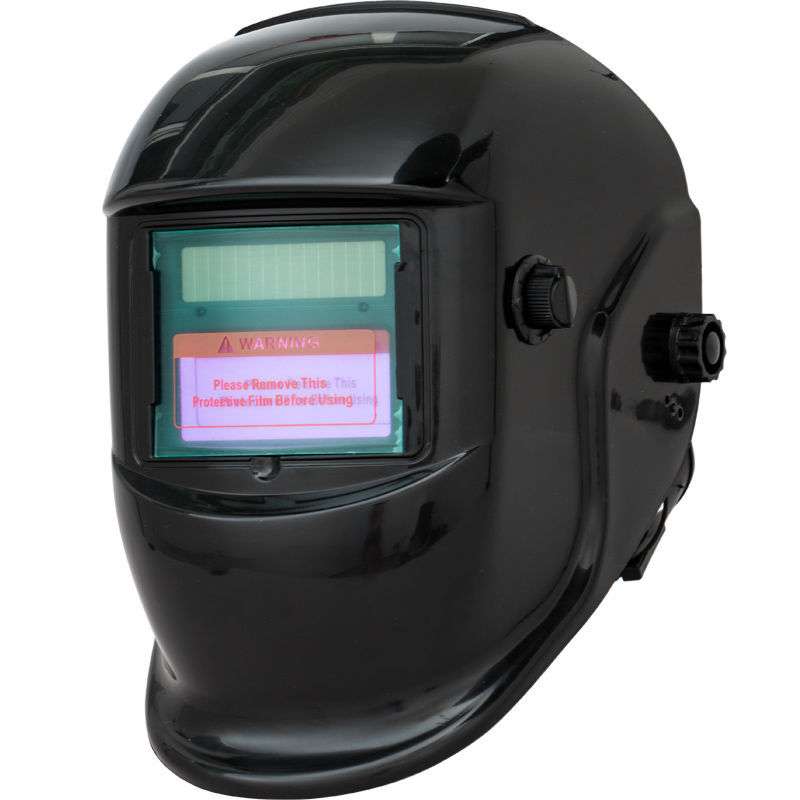
My search wasn’t for the most feature-packed or toughest shield (though durability mattered). It was for the one that best recreated that “window” experience. I landed on a model akin to the True Color Auto-Darkening Welding Helmet DIN 9-13. The specs spoke my language: Super Large Viewing Screen, clear view with the best clarity, see a larger range clearly at different angles.
In practice, these aren’t just marketing terms. The large-field automatic lens meant I had peripheral vision. I could see the entire joint setup without moving my head, keeping my body in a stable, comfortable position. The variation of luminous transmittance and optimized light diffusion meant that whether I was in a bright shop or a darker corner, the view was consistently clear, not washed out or too dark.
This was the key: the welding helmet stopped being a barrier between me and the work. It became a seamless interface. Because I could see the joints and molten pool with such definition, my hands could finally execute what my mind envisioned. My beads became consistent, my starts were precise, and I gained the confidence to try more challenging techniques. The welds weren’t just strong; they were clean, uniform, and, dare I say, beautiful.
The “After”: Craftsmanship Rediscovered
The most unexpected change was psychological. The reduced physical strain—thanks to the lighter total weight and design that minimizes pressure on the head and neck—meant I could focus longer. But more importantly, the visual clarity transformed my mindset. Welding stopped being a series of mechanical tasks. It became a focused, almost meditative practice of manipulating a tiny, brilliant pool of metal.
I started taking pride in the aesthetics of my welds, dressing them, and photographing them. That clear view gave me the feedback loop I needed to truly improve. I wasn’t just working; I was practicing a craft, with visible, tangible progress after every session. My welding helmet was no longer just a piece of safety equipment; it was the most critical tool in my shop for developing skill and satisfaction.
Frequently Asked Questions
Q: I’m just a hobbyist. Do I really need a “true color” or large-screen helmet?
A: Absolutely! In fact, hobbyists might benefit more. Professionals develop workarounds for poor equipment over years. As a hobbyist, you’re building habits from scratch. Starting with a clear, large view accelerates your learning curve, reduces frustration, and makes the hobby more enjoyable from day one. It’s the fastest way to see improvement in your work.
Q: Will a larger viewing screen compromise safety or durability?
A: Not with a well-designed helmet. Modern materials like high-quality PC or PP are both resistant to falls and offer good heat insulation. The large screen is protected by the same robust shell. Safety standards (like the DIN rating) apply to the entire lens assembly, ensuring it blocks harmful UV/IR radiation regardless of its size.
Q: I wear prescription glasses. Will this type of helmet still work comfortably?
A: Yes, and it can be a significant improvement. A super large viewing screen provides more space between the lens and your glasses, reducing the chance of contact and fogging. The adjustable design of the headband is crucial—you can set the tightness to securely hold the helmet without squeezing your glasses against your face, ensuring maximum comfort for long-term work.
The Lesson for Your Bench
My story isn’t unique. It’s a universal experience for anyone who upgrades from merely adequate to intentionally excellent gear. The right welding helmet isn’t a commodity. For the hobbyist, it’s the difference between frustration and fun. For the professional, it’s the difference between good enough and impeccable.
If you feel like you’re working against your equipment, if you finish a project with more fatigue than pride, look at what’s on your head. Investing in a welding helmet that prioritizes a true-color, large, and clear view is not an upgrade to your toolbox; it’s an upgrade to your capabilities, your comfort, and your enjoyment of the craft. Don’t just weld in the dark. Find a helmet that turns on the lights. See what you’ve been missing.
Open up your weld world. Experience the True Color Auto-Darkening Welding Helmet for superior clarity and control.