
Walk into any serious fabrication shop, shipyard, or pipeline site, and you’ll feel it: the steady hum of productivity punctuated by the sharp crackle of arcs. This isn’t a weekend hobbyist’s garage; it’s a professional ecosystem where time is money, safety is non-negotiable, and equipment failure is not an option. In these environments, your welding helmet isn’t just personal protective equipment—it’s a critical piece of your productivity toolkit. The wrong hood can mean missed deadlines, eye strain by 2 PM, and unnecessary physical fatigue. The right one feels like an extension of yourself, a reliable partner through every grind, tack, and bead. Let’s talk about what makes a welding helmet truly built for the professional grind.
Beyond the Spark: The Real-World Demands of a Pro Shop
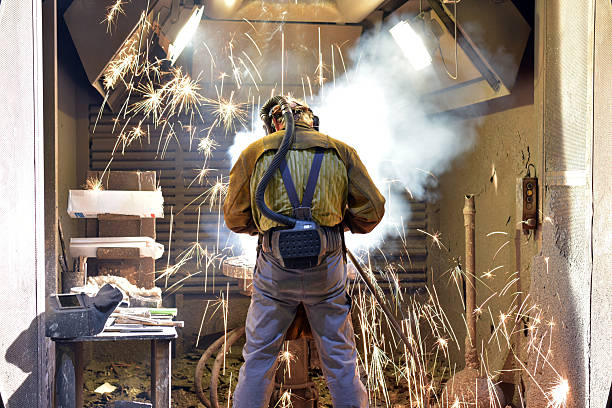
The challenges in a professional setting are cumulative and relentless. It’s not just about blocking light from a single weld; it’s about enduring a process.
- Marathon, Not a Sprint: Shifts are long. A welding helmet that feels fine for an hour can become a neck-crushing, headache-inducing burden by hour six. Comfort isn’t a luxury; it’s a prerequisite for maintaining focus and quality throughout the day.
- The Task-Switching Tax: Professional work is rarely linear. You’re not just welding for eight hours straight. You weld, you stop to grind a bevel, you chip slag, you check fit-up, and you weld again. Constantly flipping your shield up and down isn’t just annoying; it’s a massive waste of cumulative time and breaks your concentration. It also exposes your face to flying debris during grinding.
- Unforgiving Conditions: These environments test durability. A welding helmet might get knocked off a workbench, baked under shop lights, or exposed to spatter and grinding dust. It needs a premium durability that’s resilient, anti-fall, and robust—not just on paper, but when your paycheck depends on it.
- Power Anxiety: Nothing halts momentum faster than a dead battery mid-weld on a critical joint. In a fast-paced shop, remembering to charge your helmet’s battery is one more tedious task on a long list. Professionals need gear that’s ready to go, always.
The Anatomy of a Professional-Grade Partner
So, what features directly address these grind-it-out realities? Look for a welding helmet designed with workflow, not just welding, in mind.
1. The Efficiency Engine: Seamless Transition is Key. The single biggest workflow upgrade is a helmet that eliminates the constant flip-up, flip-down dance. The ideal auto-darkening welding helmet for pros features a mode that lets you freely switch between transparent and filter lenses. This means you can finish a weld, grab your grinder to clean up, and then reposition and restart—all without ever lifting the mask or removing your primary face protection. This seamless transition is a game-changer for efficiency and safety.
2. The Endurance Champion: Built for the Long Haul. Durability here is about materials and design. Look for construction from high-quality PP or similar materials that are resistant to falls and offer good heat insulation. This isn’t just about surviving a drop; it’s about the shell resisting warping from ambient heat and protecting the sensitive electronics inside. Furthermore, professional use demands a perfect fit achieved through multiple adjustments. The helmet should feel secure and balanced without pressure points, distributing its weight evenly to minimize pressure on the head and neck.
3. The Always-On Power Plant. For professionals, the best power source is often no source at all—at least, not one you need to think about. A solar-powered design is a standout feature for the working welder. It eliminates the need for recharging by harnessing light from your work environment and the arc itself. This eco-friendly and maintenance-free energy supply ensures your helmet is perpetually powered up. You grab it, you use it, and you put it down. No battery swaps, no charging cables, no surprises.
4. The Commanding View: Clarity Under Pressure. A large, clear view is about more than luxury; it’s about precision and reduced fatigue. A spacious viewing area, say a 3.86×1.62 inch viewing area, provides crucial peripheral vision for situational awareness and helps maintain a natural, comfortable head position. When you can see a larger range clearly at different angles, you make fewer corrective body movements, reducing physical strain and improving bead placement.
A Helmet That Gets the Job Done
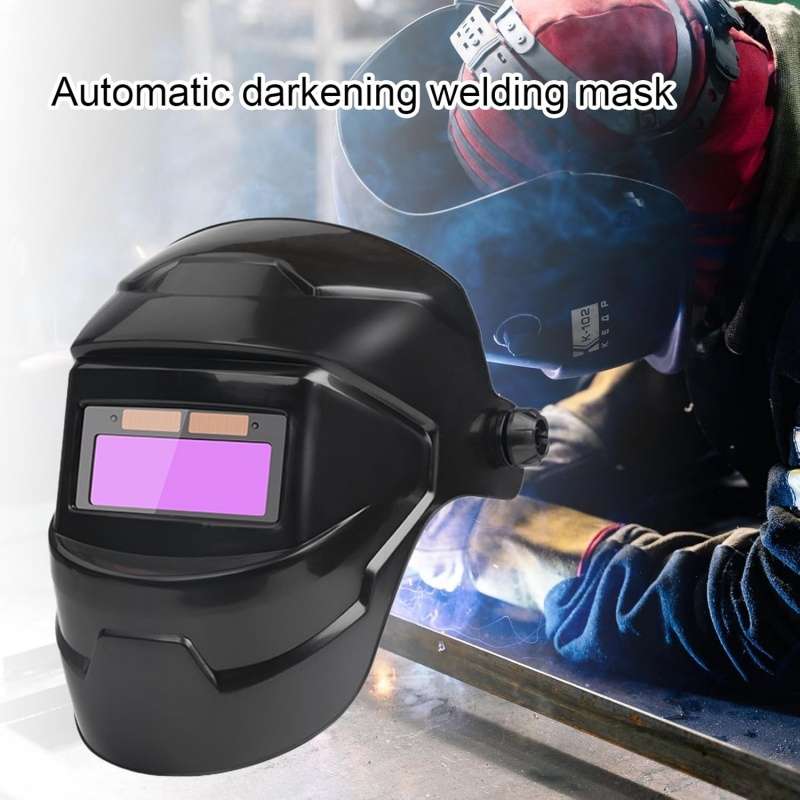
Consider a helmet built with these professional demands at its core, like the Large-Screen True-Color Auto-Dimming Welding Helmet. It reads like a checklist for shop life.
Its solar-powered design tackles reliability anxiety from the start. Switching seamlessly between welding and grinding reduces task-switching stress, keeping your guard up both literally and figuratively. Adjustable to fit a wide range of users, it offers all-day comfort for long sessions. Built with durable, anti-fall materials, it stands up to heavy use. Versatile across TIG, MIG, MMA, and plasma cutting, it suits pros facing varied tasks in a single week. This isn’t a helmet with scattered features—it’s a unified tool built for real professional workflow.
Frequently Asked Questions (FAQ)
Q: Is a solar-powered helmet reliable in low-light conditions, like inside a large vessel or under a piece of equipment?
A: Yes, modern solar-powered auto-darkening helmets are designed for this. They almost always include a long-life backup battery (like a lithium cell) that is kept charged by the solar panels during normal use. This battery powers the helmet in low- or no-light conditions. The solar feature primarily ensures the backup battery is always topped up, preventing failure.
Q: I wear a hard hat for part of my job. Can I use a welding helmet with it?
A: Absolutely. Many professional-grade welding helmets are specifically designed to integrate with standard hard hat systems. Look for helmets with a “hard hat adapter” or a headgear system that can be easily mounted onto the slots of your hard hat. This is essential for sites requiring head protection from falling objects in addition to welding PPE.
Q: For professional use, are more arc sensors really necessary?
A: In complex environments, yes. More arc sensors (e.g., 4 vs. 2) increase the reliability of arc detection, especially if you’re welding in odd positions where your body or workpiece might shade one or two sensors. It prevents the dangerous and frustrating scenario of the lens not darkening because a sensor was blocked. For consistent, reliable performance in varied professional scenarios, more sensors are a worthwhile investment.
The Bottom Line: Invest in Your Workflow
Choosing a welding helmet for professional use isn’t about finding the shiniest or most feature-laden model. It’s about identifying the tool that removes friction from your day. It’s the helmet that doesn’t need babysitting (solar power), that keeps pace with your changing tasks (grind mode), that you forget you’re wearing because it’s so comfortable (adjustable fit), and that you can trust to survive the shop environment (premium durability).
The right professional welding helmet pays for itself not in a single dramatic moment, but in a thousand small savings: saved seconds on each task switch, saved energy from reduced strain, and saved frustration from gear that just works. In the world of professional metalwork, your hood is your constant companion. Make sure it’s a professional one.
Upgrade your workflow with a welding helmet built for real job site demands.