
Let’s be honest: our welding projects have a funny way of outgrowing our gear. You buy a helmet for that one car repair, only to find yourself later tackling a patio gate, then helping a friend with some delicate artwork, and suddenly you’re staring down a major fabrication job. The welding helmet you started with suddenly feels… limited. Too dark for precise TIG work, too clunky for quick repairs, and maybe not tough enough for the heavy stuff.
The temptation is to start a collection—a different hood for every task. But what if you didn’t need a garage full of gear? What if the secret to a versatile workshop was finding that one, truly adaptable welding helmet that could seamlessly shift roles with you? Not a jack-of-all-trades and master of none, but a genuine multitasker built for the modern maker who wears many hats and helmets.
The Modern Welder’s Dilemma: One Day, Five Different Jobs
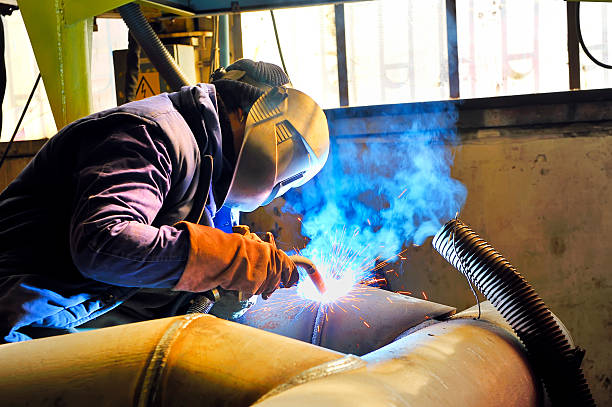
Think about your last month in the shop. Your needs probably weren’t monolithic.
- Tuesday: You spent an hour on low-amp TIG work, carefully feeding filler rod on a thin piece of tubing. You needed crystal clarity to see the faint arc and a tiny puddle.
- Thursday: It was all heavy MIG on thick steel, with bright sparks and lots of spatter. Here, durability and a reliable, wide shade range were key.
- Saturday: You switched between welding, grinding down welds, and measuring for the next piece. The constant flip-up, flip-down of the hood was driving you nuts.
This is the reality. A good welding helmet today isn’t judged on one task but on its ability to navigate a whole ecosystem of metalwork. It needs to be as flexible as you are.
What Makes a Helmet a True Multi-Tasker?
So, what transforms a basic shield into a workshop MVP? It’s a combination of intelligent design and features that remove friction from your process.
1. The Vision to See Everything (Literally).
The foundation is a great view. Not just a big view, but a clear view with the best clarity. A super large viewing screen that optimizes light does two critical things: First, it reduces tunnel vision, letting you see more of your workpiece and your surroundings for better safety and orientation. Second, when paired with true color technology, it makes distinguishing between base metal, puddle, and filler metal infinitely easier across different processes. Whether you’re doing dark, sooty stick welding or clean, bright TIG, you need your eyes to accurately interpret the scene. This large-field automatic lens is what makes precise work possible and reduces eye strain during long sessions.
2. The Intelligence to Adapt On the Fly.
A static helmet is a limited helmet. The best multitaskers give you control. Manual adjustment via sensitivity and delay settings is non-negotiable. Crank up the sensitivity for that faint TIG arc in a bright shop. Increase the delay when doing a series of tack welds so the lens doesn’t flicker between each one. This adaptability for different environments and task durations is what lets one lens cover jobs from 30 amps to 300 amps.
3. The Comfort to Go the Distance.
Versatility fails if you can’t wear the gear. If a helmet is perfect for TIG but gives you a neck ache after 20 minutes of overhead MIG, it’s not versatile—it’s a compromise. Look for a design that prioritizes maximum comfort for long-term work. This often means a lighter total weight and an adjustable design that lets you fine-tune the headband to minimize the pressure on the head and neck. A helmet that’s comfortable for a four-hour fabrication marathon is also comfortable for a 15-minute repair.
4. The Toughness to Survive Your Shop.
Finally, a true all-rounder can’t be fragile. It needs to be more resistant to falling and offer good heat insulation. It’s moving from the clean bench to the cramped corner, getting set down on rough surfaces, and facing the general chaos of a working space. The shell material (like high-quality PC material) needs to ensure a longer service life, because a helmet that breaks when you drop it isn’t saving you money or hassle in the long run.
A Case Study in Versatility: The “True Color” Workhorse
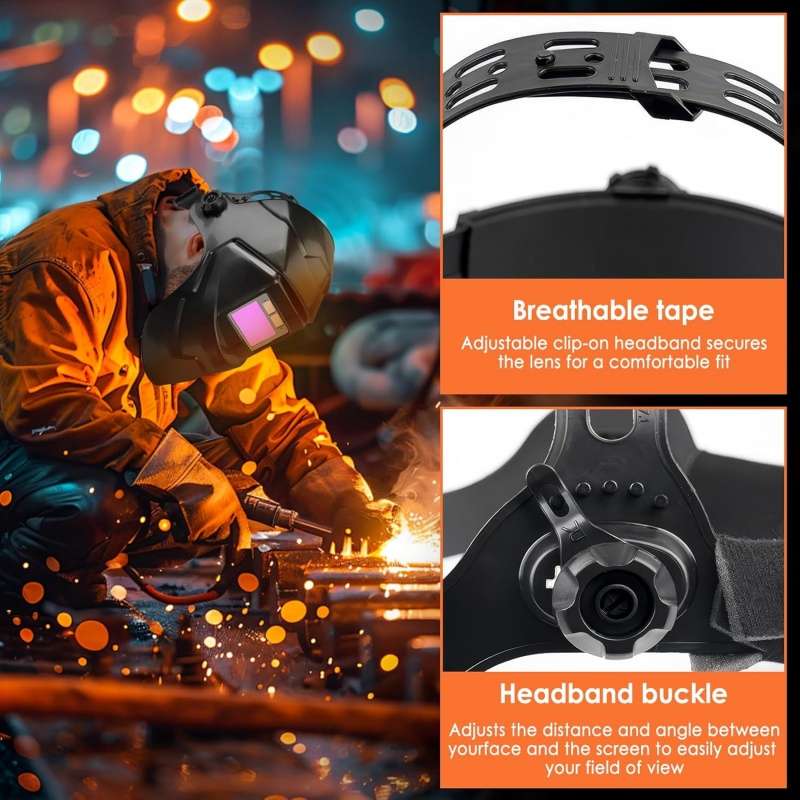
Let’s look at a helmet that embodies this multi-mission philosophy, like the True Color Auto-Darkening Welding Helmet DIN 9-13. It’s built around the core idea of adaptation.
Its entire design screams flexibility. That super large viewing screen is your command center for any task, giving you the visual real estate to manage big projects or tiny details. The promise of seeing the joints and molten pool with such great clarity is what allows for better control of the entire welding process, whether that process is MIG, stick, or TIG.
It doesn’t forget the human wearing it. The adjustable design for the headband and the overall lighter weight are direct answers to the comfort problem, aiming to reduce neck pressure across different working positions—crouched, standing, or tilted.
And with its sensitivity and delay settings, it hands you the keys to tune its performance. It’s good for various working environments, from a dimly lit garage to a sunny outdoor project. This isn’t a specialized tool; it’s your foundational, go-anywhere welding mask designed to be intelligent, practical, and cost-effective for the welder who refuses to be pigeonholed.
Frequently Asked Questions (FAQ)
Q: Can one helmet really be great for both delicate TIG and heavy-duty MIG/stick?
A: Yes, if it has the right controls. The key is adjustable sensitivity and a wide shade range. For delicate TIG, you set high sensitivity so the lens triggers on the faint arc and use a lower shade (like 9-13). For heavy MIG, you might lower the sensitivity slightly to avoid triggering from ambient light and use a darker shade. A helmet with these manual controls bridges the gap.
Q: I mostly do “”hobby”-level work. Do I need this level of versatility?
A: Hobbyists often benefit the most! You’re likely doing a wider variety of one-off projects than a production welder. Investing in one versatile helmet means you’re always prepared, whether you’re fixing a lawnmower (MIG), building a BBQ smoker (MIG/Stick), or attempting a small bronze sculpture (TIG). It simplifies your gear and elevates your capability for every project.
Q: Is a larger, more feature-rich helmet always heavier and less comfortable?
A: Not anymore. Modern materials and design have largely solved this. Using lighter yet strong plastics and strategic padding, manufacturers can create a helmet with a large viewing screen and features that is still lighter in total weight than old-school, basic models. Always check the weight spec and look for mentions of adjustable headgear designed for comfort.
Stop Switching Helmets, Start Switching Tasks
The goal isn’t to own a museum of welding helmets. It’s to own one that gets out of your way and lets you work. The ideal welding helmet for the adaptable welder is the one you don’t have to think about. You grab it for a five-minute tack or an all-day build, and it just… works. It provides the clarity for precision, the comfort for endurance, the controls for adaptation, and the durability for reality.
Stop trying to match a helmet to every hypothetical job. Find the one that matches your curiosity and your drive to tackle whatever mental challenge comes next. Your perfect, do-it-all welding helmet is out there, waiting to become the most reliable partner in your shop.
Upgrade to one versatile welding helmet and handle TIG, MIG, and stick projects with confidence.