
Walking into a store or browsing online, facing the dazzling array of welding helmets, do you feel overwhelmed?
Auto-darkening, viewport size, shade level, optical grade… These terms piled together can confuse any novice (and even some veterans).
Don’t worry, choosing the right welding helmet is not mysticism. Today, we simplify the process and provide a clear decision framework to help you avoid common pitfalls and find your destined safety partner.
Step 1: Identify Your “Battlefield”—Welding Type and Environment
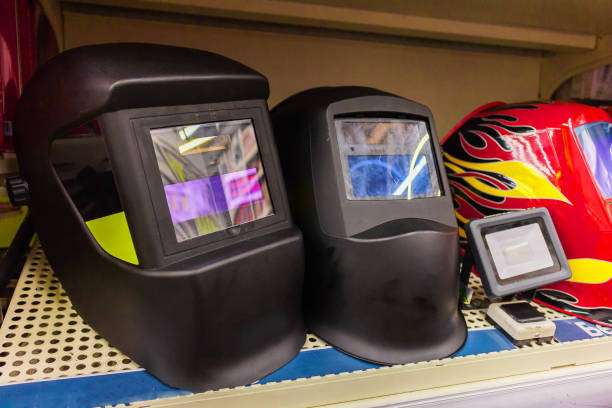
This is the foundation for all choices. Different welding processes have vastly different helmet requirements.
|
Welding Type |
Requirements |
|
MIG/MAG or FCAW (Flux-Cored Arc Welding) | High spatter and strong arc light. Requires a helmet with sufficient outer lens protection, a fast-response lens, and an impact/heat-resistant shell. Shade usually 10-13. |
|
TIG Welding | Low amperage, high precision. Needs a clear view to monitor tungsten and molten pool; high optical clarity and true-color technology are essential. The shade range may vary from 5 to 13, so a wide adjustable range (3/5-9 to 9-13) is critical. |
|
MMA/Stick Welding |
Most versatile but produces heavy smoke. Helmet ventilation and internal comfort become important. |
|
Multi-Process Users |
For those switching between TIG, MIG, MMA, cutting, and grinding, a multifunction helmet with wide adjustability is required to meet both fine and coarse tasks. |
Core Advice: Honestly list the work you do 80% of the time. For occasional tasks, compromise is acceptable; invest in your core needs.
Step 2: Understand Key Parameters—View, Speed, and Clarity
These are the “eyes” and “brain” of the helmet, directly affecting experience and safety.
- Viewport size: Simply, the bigger the better. A 3.86×1.62 inch or larger viewport provides wider peripheral vision, making alignment and surrounding monitoring easier, reducing head movement. Large viewports mean fewer blind spots and higher productivity.
- Response speed: The time for the auto-darkening filter (ADF) to switch from bright to dark. The standard is ~1/25,000 sec.; top models reach 1/30,000 sec. or faster. Must be faster than harmful light reaching your eyes. 1/30,000 sec is professional-level protection.
- Optical grade: Measures visual clarity (EN379), usually 4 digits, e.g., 1/1/1/2. “1” is the highest. Determines image distortion, astigmatism, and color fidelity. A 1/1/1/1 grade ensures a clear, true-to-life view from center to edge, reducing eye fatigue.
- Shade level & adjustment: Ensure helmet shade covers your typical processes. Adjustable sensitivity and delay help prevent false triggers in bright/dim workshops and maintain a dark state briefly after welding to filter residual arc glow.
Step 3: Wearing Experience—The Overlooked “Comfort Trap”
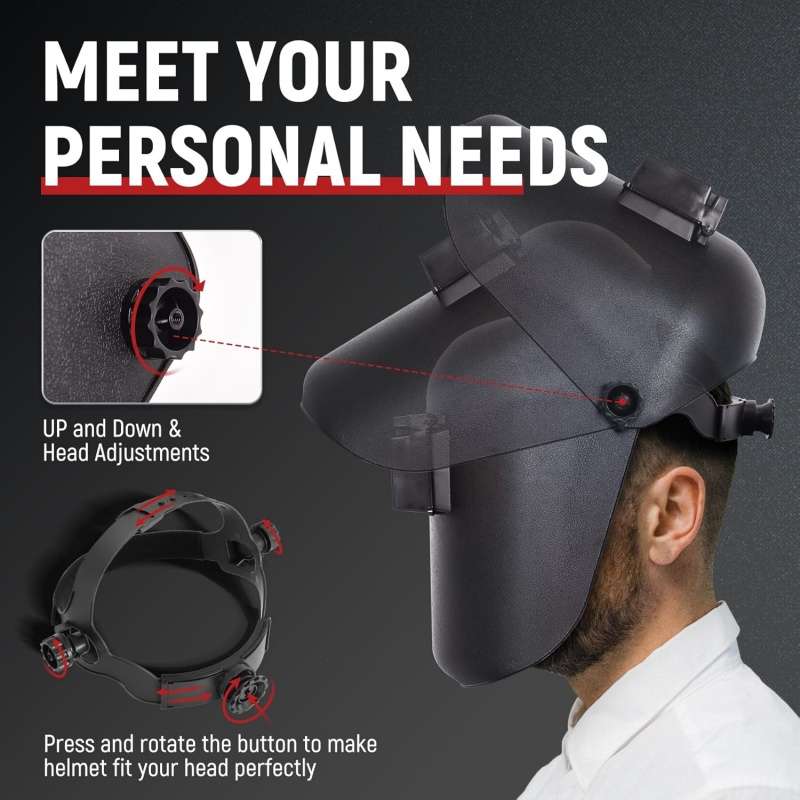
A helmet that causes neck pain or heat discomfort, no matter how advanced, will make you want to remove it. Comfort directly affects work endurance and safety.
- Weight & balance: Lightweight design is preferred. Check the center of gravity. A well-designed helmet distributes weight evenly to avoid forward tilting when lowering the head. Adjustable height helps find optimal balance.
- Headband system: Core of comfort. Must be multi-step adjustable, fitting snugly without pressure points. High-quality padding should be breathable and sweat-absorbent. Long-term wear reducing head/neck pressure is the golden standard.
- Shell & material: Shell material impacts durability and protection. Quality PP or PC materials provide impact resistance, heat resistance, and insulation. Ideal dimensions (e.g., 28x20x20 cm) ensure adequate coverage without restricting head movement.
Step 4: Additional Features vs. Budget
Once core requirements are met, consider value-added features.
- Power system: Solar power is excellent, meaning the helmet rarely loses power in light conditions. Combined with a replaceable CR2450 battery, it provides ultimate reliability in any environment.
- Blue light protection: For professionals welding long hours, filtering harmful blue light reduces eye fatigue and protects long-term vision.
- Cost-effectiveness: Define “must-have” vs. “nice-to-have.” A helmet suitable for various environments, with solid core protection, and comfortable to wear often delivers the best long-term value.
Frequently Asked Questions (FAQ)
Q: Is a bigger viewport always better? Will it affect protection or be easier to damage?
A: Within reasonable design, yes. A larger viewport improves operational experience but must be paired with a sturdy shell and high-quality lens. Properly designed large-view helmets maintain protection and strength. A bigger viewport may slightly increase the outer lens replacement cost, but productivity and comfort benefits outweigh it.
Q: Is solar power really reliable? Will it fail in dim workshops?
A: Modern solar welding helmets are reliable. Solar panels mainly assist charging and extend battery life. Even in dim light, the helmet relies on its internal battery, which usually supports hundreds of hours. Most solar helmets also have replaceable backup batteries (e.g., CR2450) with low-power alerts, easily swapped in minutes. Solar ensures minimal charging concerns, achieving eco-friendly, long-lasting use.
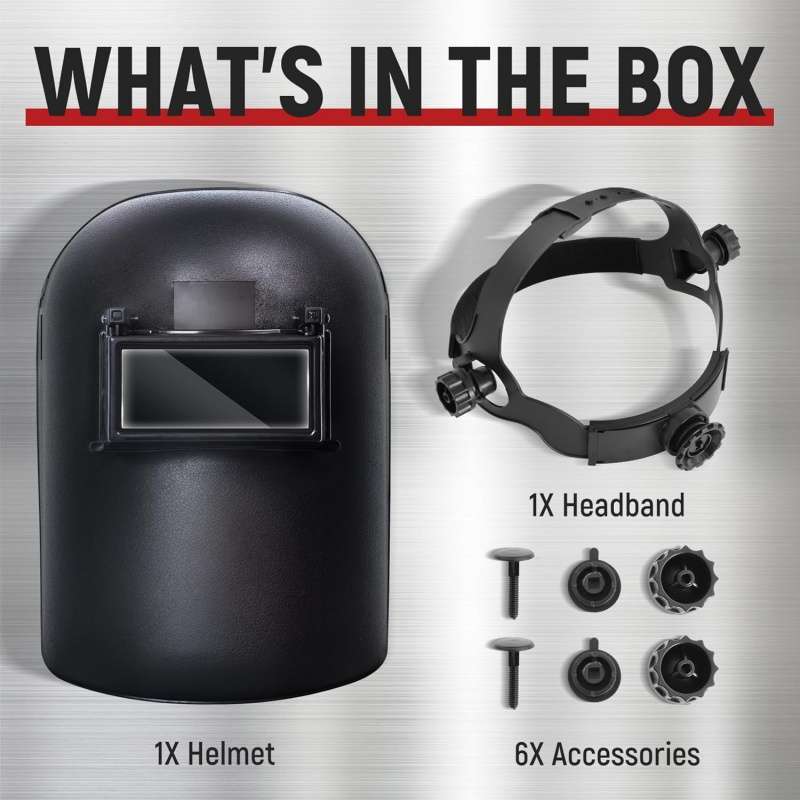
Choosing a welding helmet is essentially an investment in productivity, comfort, and long-term health. It should not be a guess but a rational decision based on self-awareness and product understanding.
Remember the process: define needs, review core performance, personally assess (or reference reliable reviews) wearing experience, then weigh additional value within your budget. Avoid flashy parameter traps; focus on features impacting daily work—like a true-color large viewport for longer, clearer vision, an adjustable headband system to reduce pressure, and broad applicability for all your welding tasks.
Now, use this guide to reassess your choice. Investing in a helmet that truly fits you is an investment in your tools, your safety, and your value. Your eyes and neck will thank you for the work you do today.